Best CCTV Camera for Home India 2026: Top Picks & Guide


Introduction: The "Digital Guard" Your Home Needs
A few years ago, someone started stealing the morning newspaper from right outside my door. It was a small thing, but it felt like a violation of privacy. I installed a small Wi-Fi camera, caught the “thief” (a neighbor’s pet, believe it or not!), and realized then that these gadgets are more than just electronics—they are a “Digital Guard” for your family.
Whether it’s verifying a delivery person when you’re alone, checking if the kids have reached home from school, or keeping an eye on elderly parents, a CCTV is no longer a luxury. Thanks to “Ambani bhai” making high-speed internet available in almost every Indian ghar, you can now monitor your home from any corner of the world. In this guide, I’ll help you navigate the jargon and pick the best security setup for 2025.
Table of Contents
Understanding the Types: Which one fits your "Ghar"?
Before you spend a rupee, you need to know which “jawan” to station at which post.
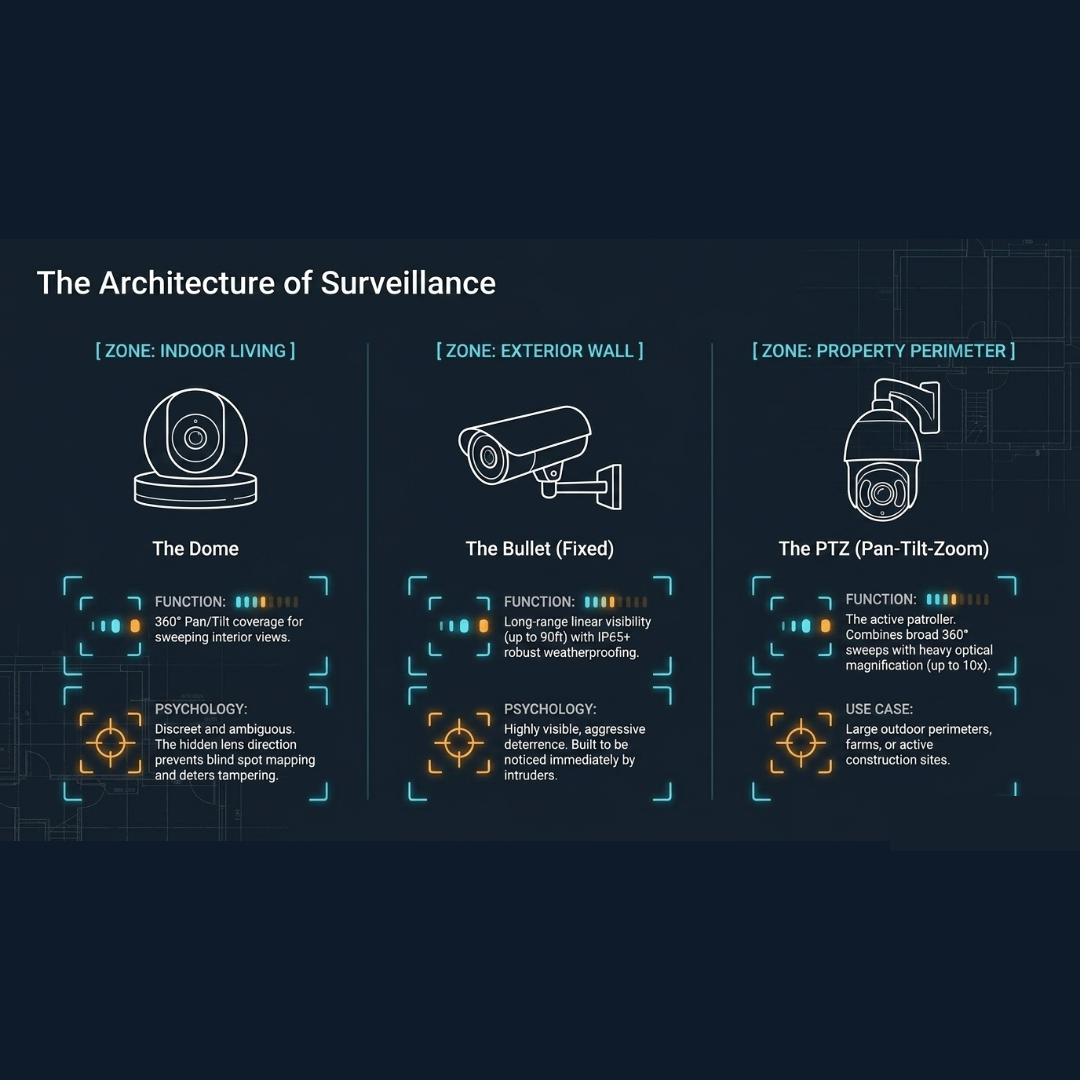
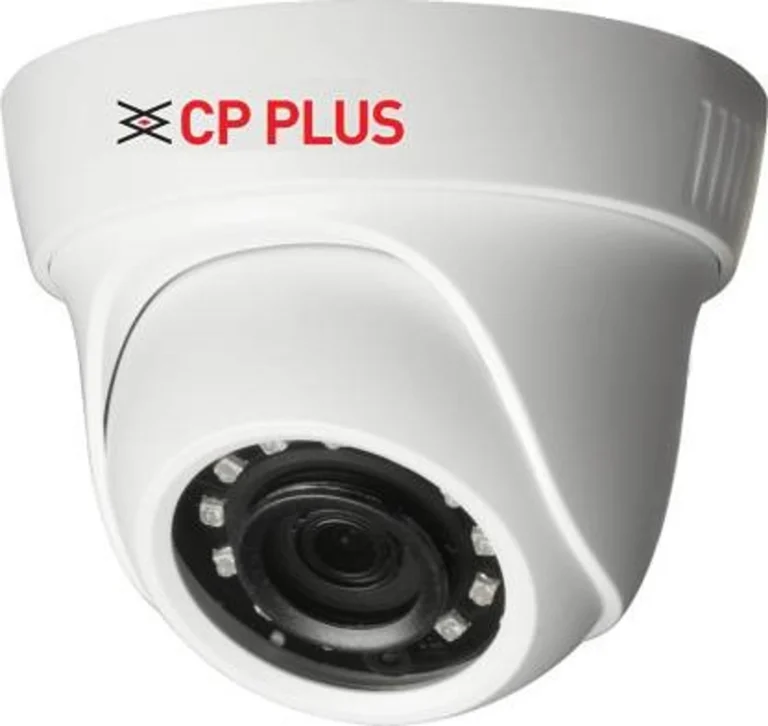
- Dome Cameras: These circular cameras are usually mounted on the ceiling. They offer a 360° view and are notoriously hard for intruders to tamper with because it’s difficult to tell which direction the lens is pointing. Best for: Living rooms and shops.
- Bullet Cameras: These have a cylindrical shape and a high “scare factor.” They are designed to be seen so that thieves think twice before entering. They are rugged and offer long-distance visibility. Best for: The main gate or driveway.
- PTZ (Pan-Tilt-Zoom): These are the “advanced” scouts. You can move the lens up, down, left, and right via your phone app. Best for: Large backyards or terraces where you want total control.
- 4G SIM Cameras: If you have a farmhouse, a construction site, or a spot where the Wi-Fi is “flaky,” brands like Manome offer cameras that work with a 4G SIM card. No router needed!
Must-Have Features: The "Checklist" Before You Buy
Don’t get fooled by fancy boxes. As a specialist, here is what I actually look for:
- 3MP/2K Resolution: In 2025, 1080p is old news. You need 3MP or 2K resolution so that when you zoom in, the visitor’s face doesn’t look like a pixelated smudge.
- Night Vision: Most have Infrared (B&W) vision, but look for Color Night Vision if you want to identify the color of a suspicious car or person’s clothes at night.
- Two-Way Talk: Essential for telling a delivery boy, “Bhaiyya, gate pe rakh do” (Brother, keep it at the gate), while you’re stuck in an office meeting.
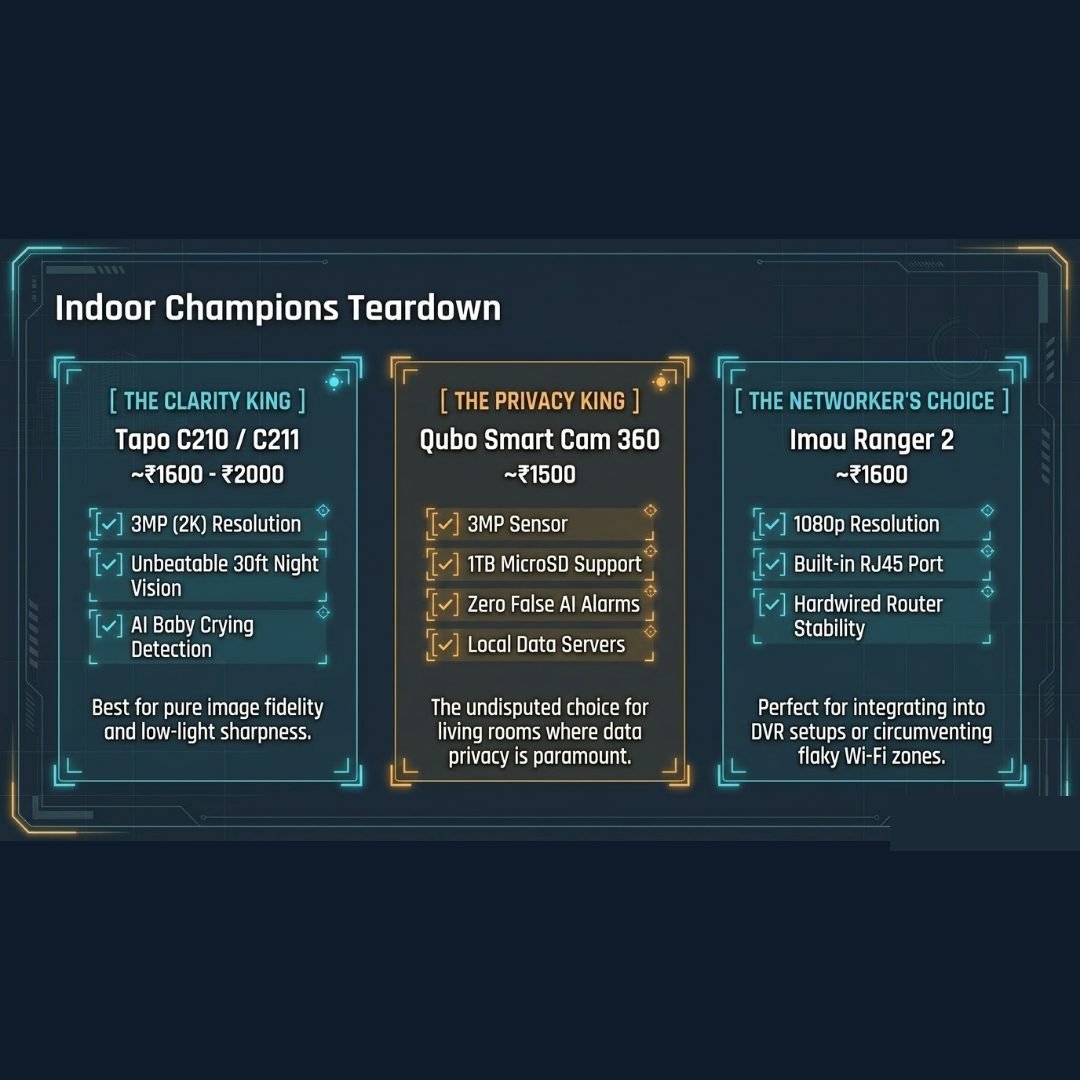
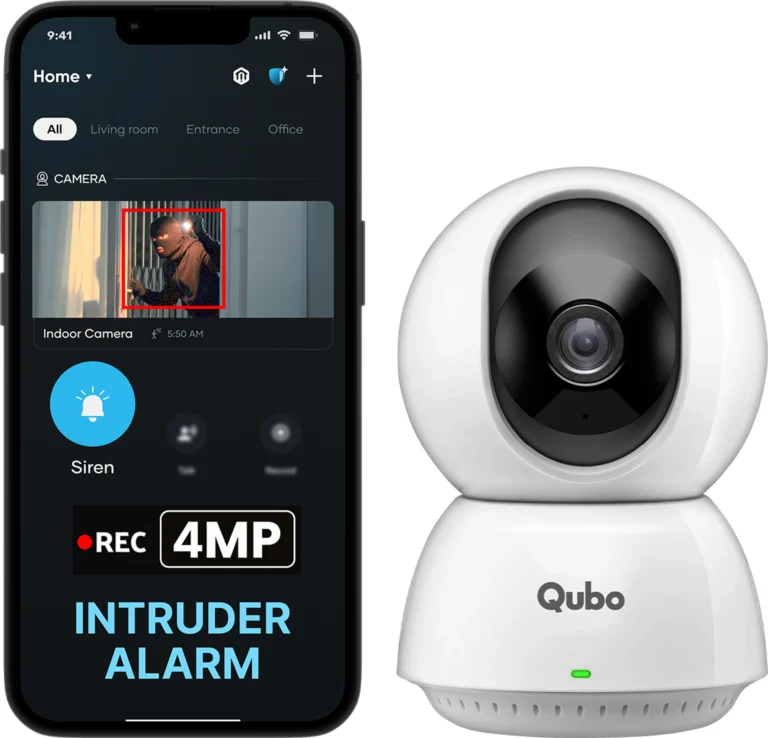
- Smart AI Alerts: Cheap cameras send a notification every time a fly passes or a curtain moves. Look for brands like Qubo that use AI to distinguish between a human intruder and a stray cat to avoid “false alarm” fatigue.
Top Recommendations for 2026
Best Indoor Cameras (The Budget & Value Picks)
Economical - Best for Basics
TP-Link Tapo C200 360° 2MP Wi-Fi Camera


Best Outdoor Cameras (The Tough Ones)
- Tapo C320WS (~₹3,000): This is a specialist’s secret. It’s an older model but works brilliantly with IP66 weatherproofing against Indian monsoon and dust. It’s often ₹1,000 cheaper than the latest variants but offers almost the same features.
- Trueview 3M Mini PT (~₹3,000): If you need to see the license plate of a car parked far away, this camera’s 10x zoom capability is a lifesaver.
- Tapo C425 (Battery Powered): Great because it’s wire-free with a magnetic mount. Specialist Warning: Because it’s magnetic, someone can literally pull it off the wall and steal it. If you buy this, Cloud Storage is mandatory so you don’t lose the footage along with the camera!
Pro-Tips for Installation & Maintenance
- Specialist “Insider” Advice:
- The Cabling Trap: Most brands provide very short power cables in the box. If you are mounting the camera on a high ceiling, you will need to call an electrician for extra wiring or buy a high-quality extension board.
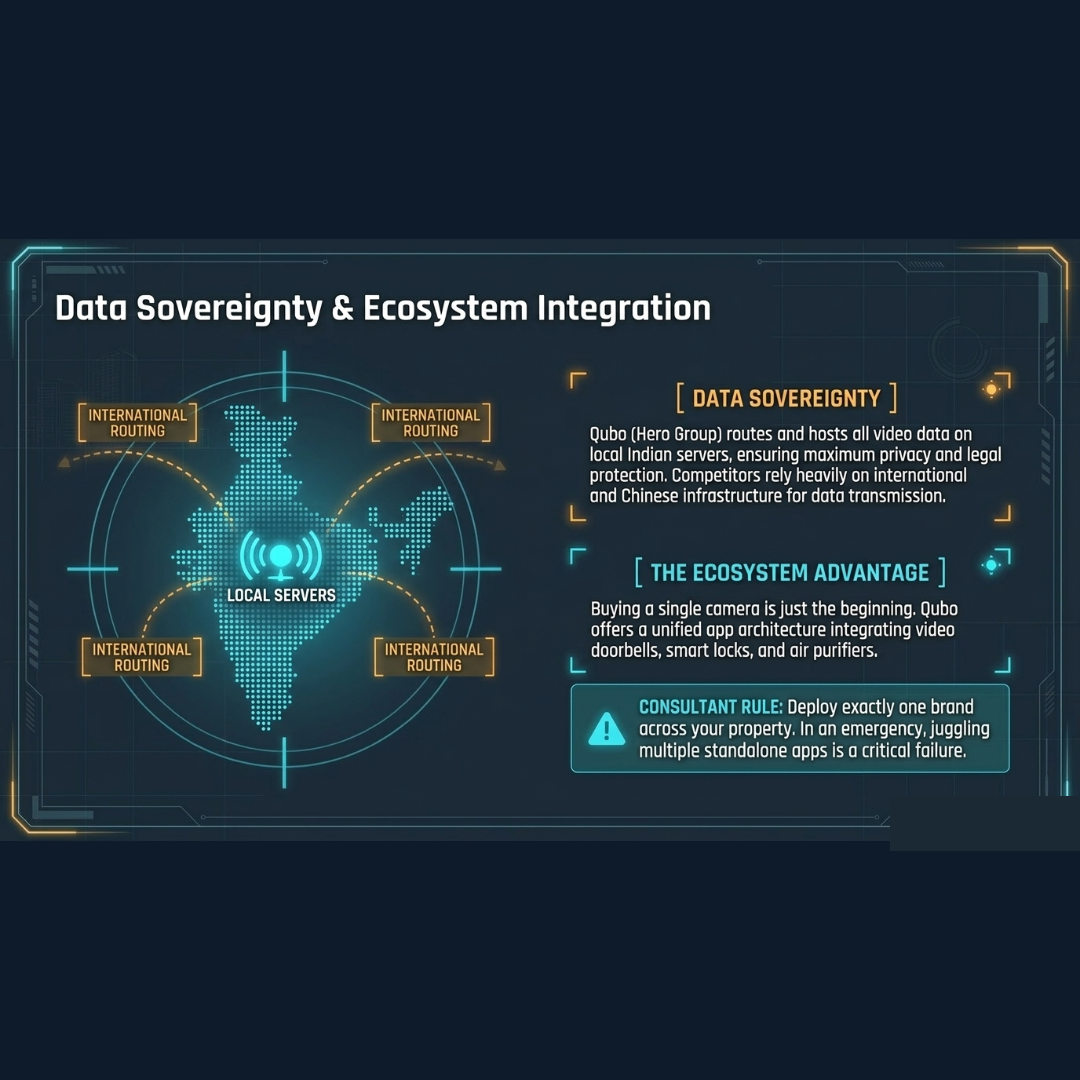
- Stick to One Brand: If you need 3 cameras, buy them all from the same brand. Opening three different apps just to check your house is a headache you don’t want.
- Wi-Fi Frequency: These cameras only work on 2.4GHz Wi-Fi. If your router is set to 5G only, the camera won’t connect.
- Installation: Indoor cameras are pure DIY. However, for outdoor cameras, Qubo stands out as they offer pan-India installation support through their technicians.
Data Privacy: Is your footage safe?
Privacy is the biggest anxiety for Indian homeowners today. Brands like Qubo have a massive advantage here because their servers are hosted in India. With international brands like Tapo or CP Plus (which uses a Chinese-made app), the data privacy transparency isn’t as clear. If you’re worried about private footage of your bedroom or living room being stored on foreign servers, Qubo is the safest bet.
Frequently Asked Questions (FAQs)
1. Can I see my home from another city? Yes, as long as your home Wi-Fi is on, you can see the live feed on your phone from anywhere in the world.
2. What happens if the internet goes down? The camera will still record to the SD card in a “loop” (overwriting old footage), but you won’t get live alerts or be able to see the feed on your phone until the internet returns.
3. How many days of recording can 64GB hold? Approximately 7 days of continuous recording. If you want months of backup, go for the Qubo with a 1TB card.
4. Do I need a technician? For indoor “Plug & Play” cameras, no. For outdoor cameras that require drilling into concrete or high-wall mounting, a technician is recommended.
Conclusion
Investing ₹2,000 to ₹3,000 today can save you lakhs in potential losses and provide priceless peace of mind. With the Amazon Great Indian Festival sales often slashing prices, now is the best time to upgrade.

I personally lean towards Qubo for their Indian servers and massive storage, but Tapo is a beast when it comes to night vision.
Which one are you leaning towards for your home? Comment below and I’ll help you decide!