
Homeowner buying guide · Research-based comparison
Choose a dishwasher that fits your Indian kitchen.
Start with the vessels you use, the space you can open into, and the service available in your city. A place-setting number alone will not tell you whether your largest kadai fits.
Houme India editorial guide · Reviewed 2 October 2026
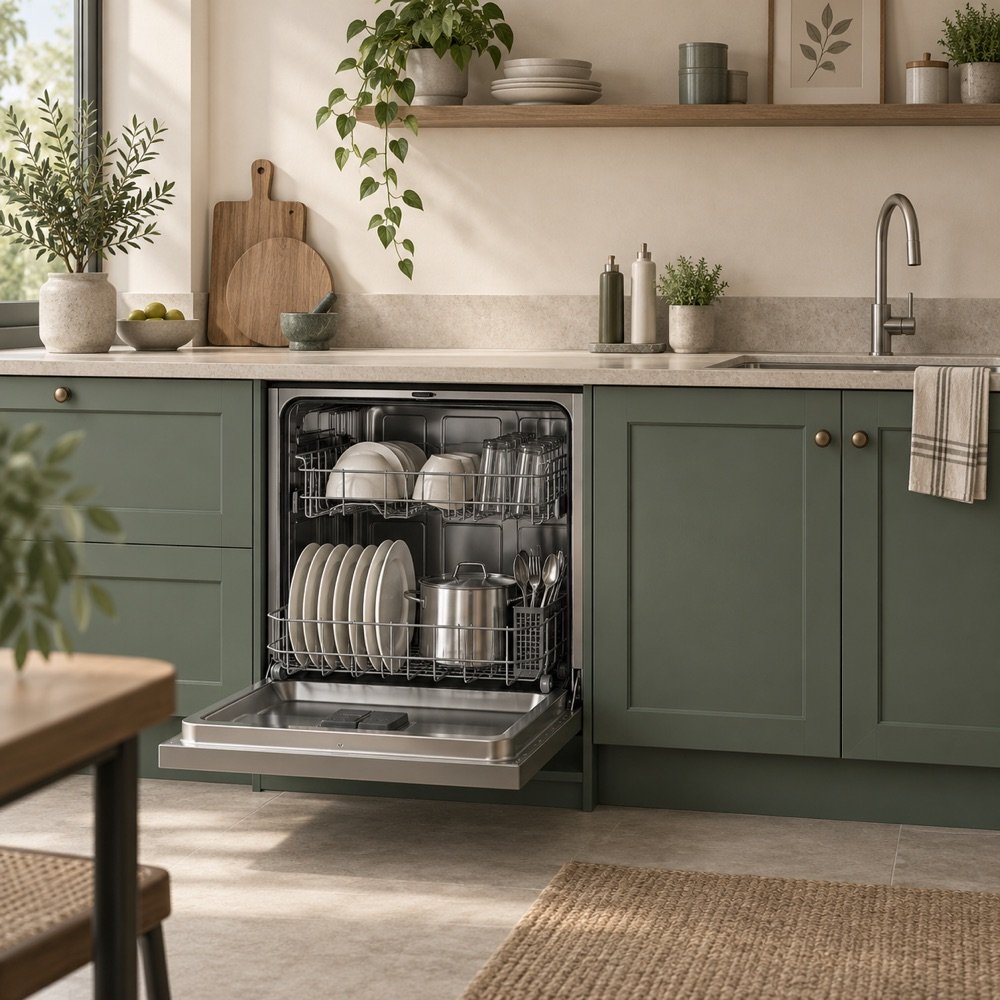
Consider a tabletop machine when the load is modest and counter space is genuinely available. For larger cookware loads, compare full-size machines using an in-store rack demonstration. Confirm installation and service before placing an order.
As an Amazon Associate, we earn from qualifying purchases. Retailer links may earn us a commission. Prices, stock and seller terms can change; confirm the exact model, local warranty and installation before paying.
Compare the exact model and your actual load.
On small screens, scroll the comparison sideways.
| Option | Why compare it | What remains to confirm |
|---|---|---|
| Voltas Beko DT8S tabletop | Eight place settings and six programmes in a tabletop format. Check your largest vessel against the racks. | Dimensions listed by the manufacturer: 55 cm wide × 50 cm deep × 59.5 cm high. Allow additional space required by the installation manual. The linked listing was unavailable when reviewed; check current availability. Check DT8S listing on Amazon |
| Bosch SMS66GI01I | Official India page lists six programmes, inherent-heat drying, half load and Extra Dry; no Home Connect. | Request the current exact-model specification sheet and a rack demonstration with your largest cookware. Confirm programme-specific consumption and required clearances. Check SMS66GI01I on Amazon |
| Built-in / premium alternatives | Useful when an integrated furniture front or different rack/noise requirement matters. | Obtain the exact model code and installation drawing; no generic luxury ranking or unverified purchase link. |
This guide combines manufacturer documentation with kitchen-planning considerations. It is not a hands-on wash-performance test. Model availability, offers and retailer variants must be checked before purchase. No guaranteed cleaning result, electricity saving or universal installation clearance is implied.
Measure with the door fully open.
Concept illustration, not a dimensioned installation plan. Use the exact model’s installation instructions.
- Measure the appliance body, required gaps, door swing and standing space.
- Check water supply, drainage, electrical requirements and accessible service connections with the installer.
- Check whether a tabletop appliance displaces essential food preparation space.
- Ask the seller what installation includes and what plumbing or cabinet work costs extra.
Load for the spray arms, not a promise of “steam cleaning”.
Dishwasher cleaning depends on water spray, detergent, temperature and the selected programme. Keep spray arms clear and separate items so water can reach their surfaces. Check each vessel’s care instructions: not all aluminium, coated cookware, plastics, glassware or stainless-steel assemblies are suitable for every programme.
Scrape food solids as directed in the appliance manual. Use dishwasher detergent rather than hand-dishwashing liquid, and set water hardness and consumables according to the model instructions.
Estimate costs using your own tariff.
Monthly running cost = cycles per month × [(kWh per cycle × electricity tariff) + detergent cost per cycle + water cost per cycle] + salt/rinse-aid allowance.
Use the documented consumption for the programme you will use. This is a calculation framework, not a promised monthly bill. Purchase, installation and service costs are separate.
Questions before ordering
Will my kadai fit?
Bring its dimensions and check rack geometry, spray-arm movement and whether its finish is dishwasher-safe. A place-setting count describes a standard load, not your cookware.
Does every load need the intensive cycle?
No. Select the programme based on soil level, material suitability and the manual. Durations and options differ by model.
Should I choose a built-in dishwasher?
Choose it when you are planning cabinetry around a specific model and want an integrated appearance. Ask for the installation drawing before finalising the cabinet, door panel and service access.
Sources
Voltas Beko DT8S official specification · DT8S model instructions
Bosch SMS66GI01I official India specification · Bosch model instructions