
Table of Contents
Why Your Next AC Purchase Should Be a 2025 Model (Even in 2026)
The "New Year, New Model" Trap
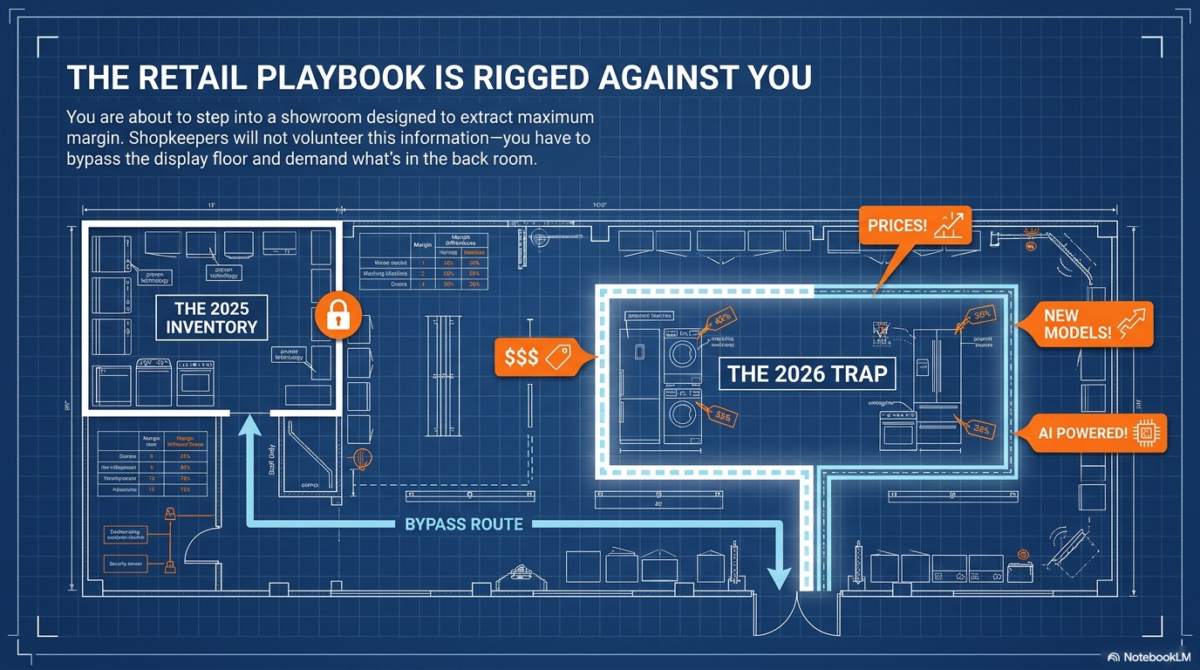
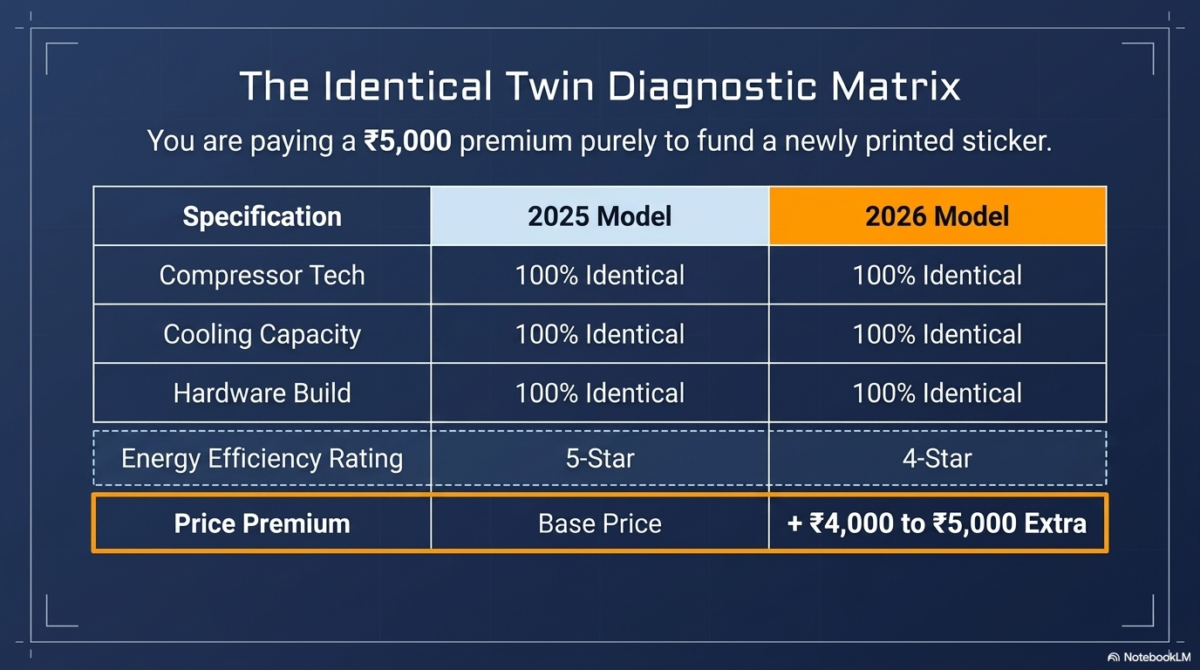
Before you walk into an appliance showroom in 2026 with your credit card ready, stop. You are being targeted by one of the oldest rebranding exercises in the book. As consumers, we are conditioned to chase the “latest and greatest” technology, assuming a 2026 sticker signifies a leap in innovation. In reality, the HVAC industry frequently relies on SKU carryovers—taking the exact same hardware from the previous year and slapping a new date on it. If you aren’t careful, you’re about to pay a massive premium for a 2026 label on a 2025 machine.
BEST AC BUYING LINKS (2026)
1. Economical (Best Budget Pick) – Daikin 1.5 Ton 3 Star Inverter AC
https://www.wishlink.com/share/nwrwht
2. Value for Money (Highly Recommended) – LG 1.5 Ton 5 Star DUAL Inverter AC (2025 Model – Get it before stocks run out!)
https://www.wishlink.com/share/ny7b6t
3. Luxury & Heavy Duty (Premium Cooling) – Panasonic 1.5 Ton 5 Star Wi-Fi Smart AC
The Star Rating Illusion
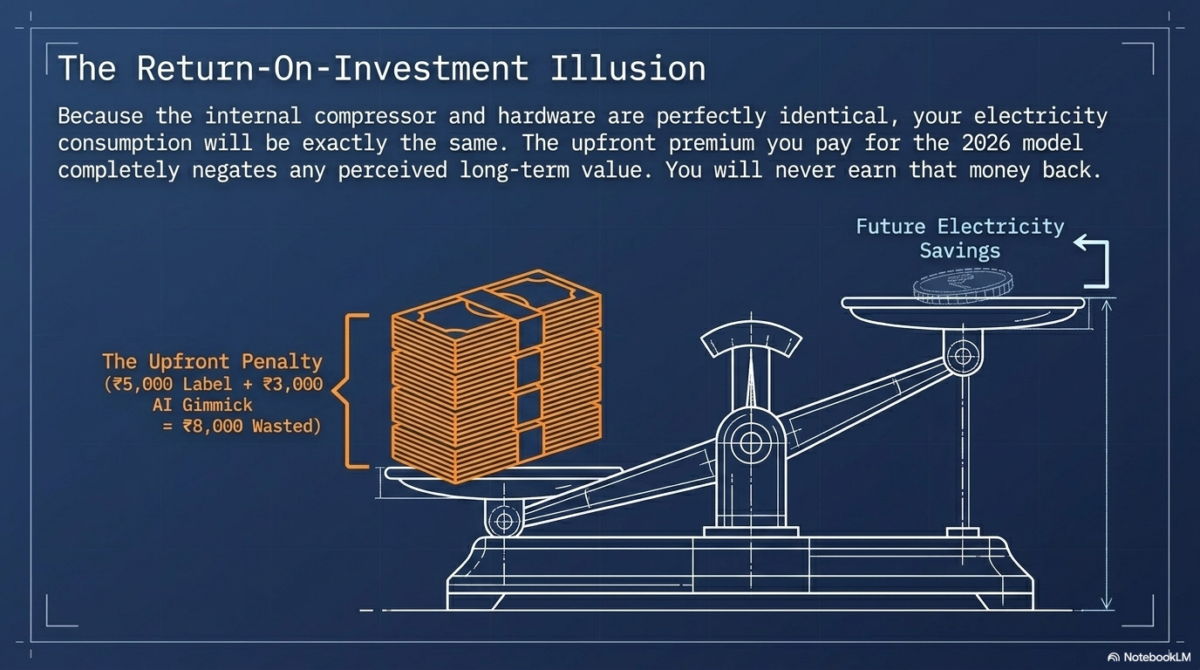
Upfront Savings vs. Electricity Math
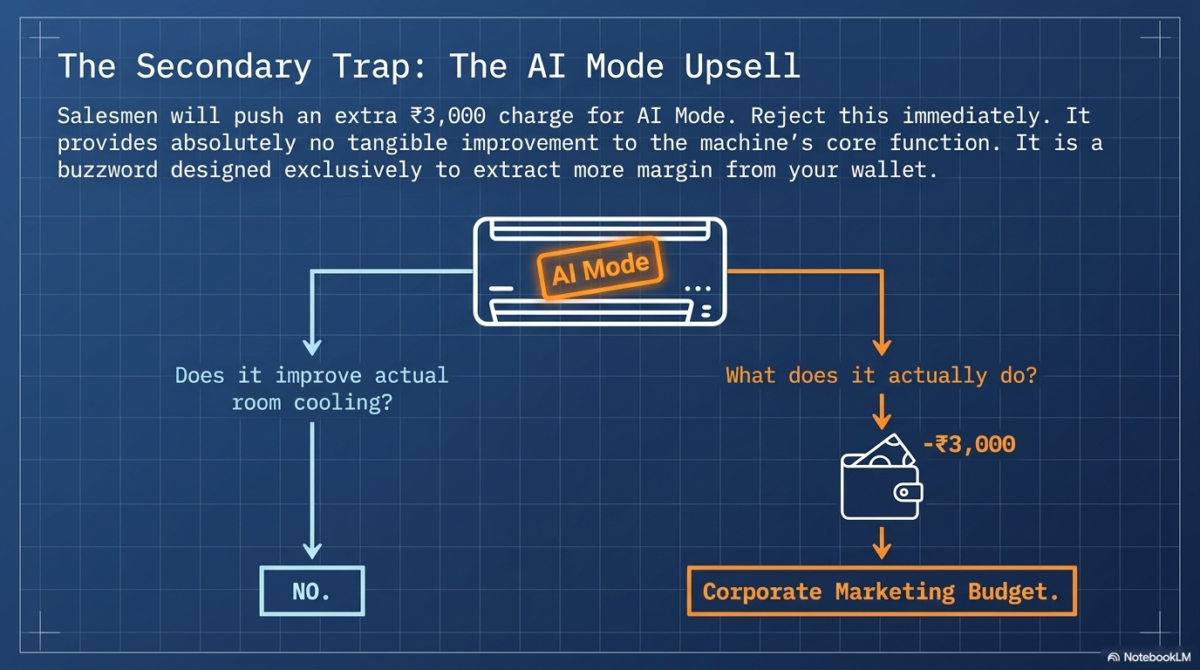
The 3,000 Rupee AI Tax
What the Salespeople Won't Tell You
A Final Word for the Smart Shopper
Frequently Asked Questions (FAQ)
Q: Is buying a 2025 AC model safe or will it lack support?
A: Yes, 2025 AC models are completely safe. Many manufacturers still support models that are 5-10 years old. You’ll get the same warranty period regardless of whether it’s a 2025 or 2026 model. Both have identical service networks.
Q: Will my 2025 AC cost more to maintain than a 2026 model?
A: No. Since the internal components are identical, maintenance costs will be the same. In fact, spare parts for older SKUs are often cheaper due to market availability.
Q: Can I negotiate better on a 2025 AC if I ask specifically for the older stock?
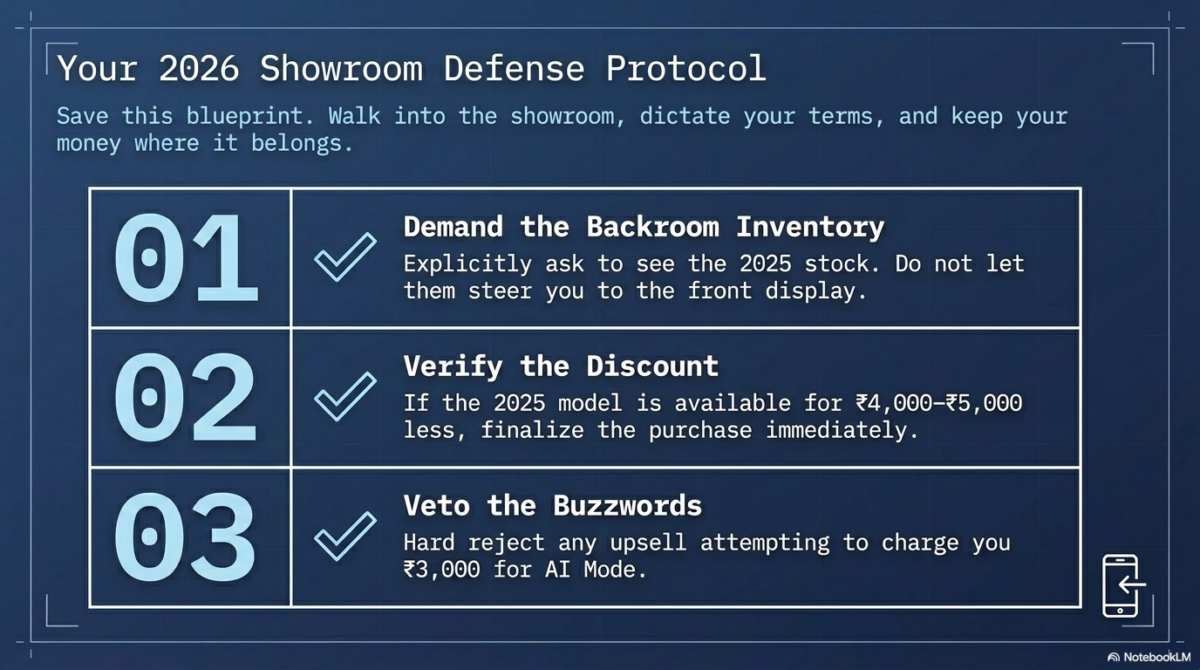
A: Absolutely. Showrooms are eager to clear 2025 inventory. Mentioning that you know about carryovers gives you negotiating leverage. Salespeople often provide additional discounts (5-10%) just to move old stock.
Q: What if the 2026 AC comes with new features that 2025 doesn’t have?
A: In 99% of cases, there are no new features—just rebranding. Occasionally, a new aesthetic or color is added, but functional performance remains identical. Ask the salesman what’s “new” (they often can’t articulate a real difference).
Q: Is it better to buy from a large chain or a local dealer?
A: Buy from wherever offers the best price on the 2025 model. Warranty and service are manufacturer-backed, not dealer-backed, so this doesn’t matter. A local dealer might even negotiate more aggressively
Key Takeaways: Make the Right AC Choice
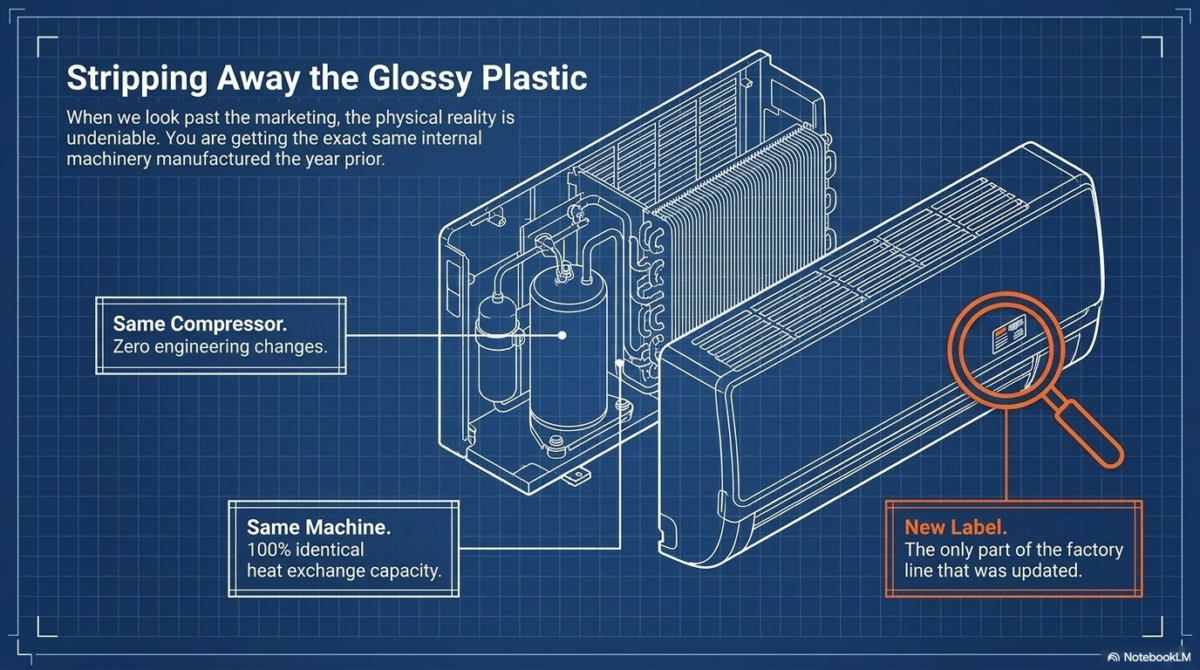
✓ 2025 and 2026 ACs are mechanically identical—same compressor, same cooling, same build quality
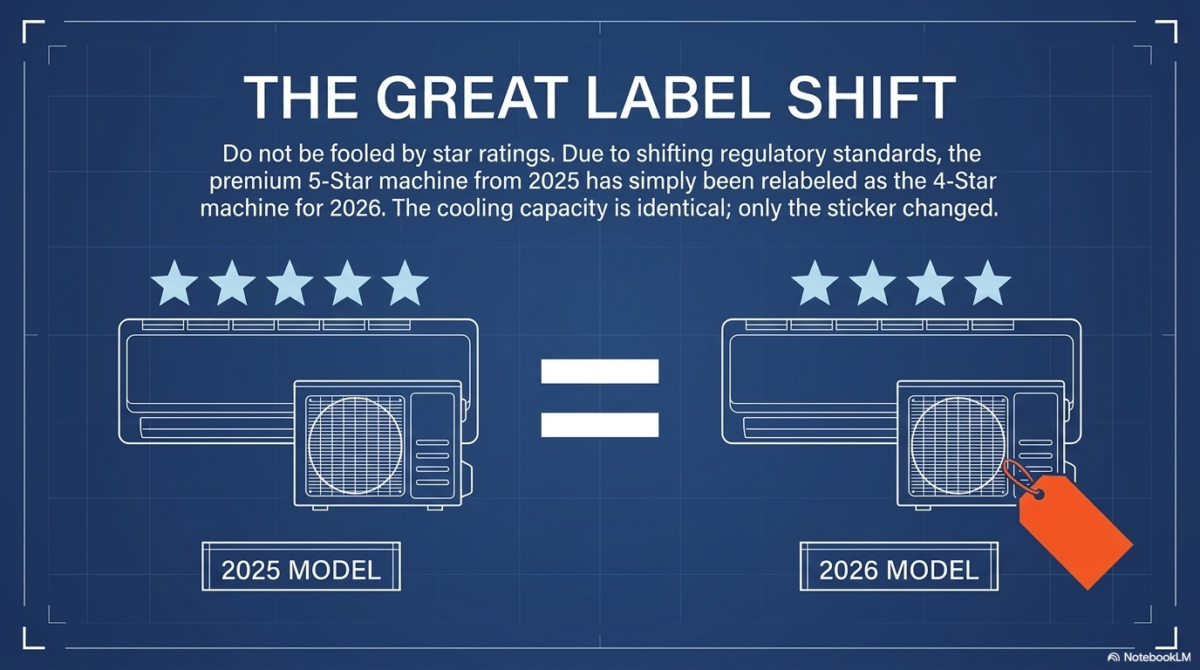
✓ Star rating changes reflect government bracket adjustments, not actual performance differences
✓ Save ₹5,000-7,000 by choosing 2025 stock—the money stays in your pocket
✓ “AI Mode” is marketing theater—basic algorithms with premium pricing
✓ Service, warranty, and spare parts are identical for both model years
✓ Negotiate aggressively when asking for 2025 models—dealers want to clear inventory
✓ Ignore showroom pressure—you have all the information to make an informed decision
✓ The smartest choice is always the one that delivers maximum cooling for minimum cost
When you walk into a showroom in 2026, remember: you’re buying cooling capacity and durability, not a model year. Let the showroom staff know you understand the game. Be the informed consumer who chooses value over hype.
Before you walk into an appliance showroom in 2026 with your credit card ready, stop. You are being targeted by one of the oldest rebranding exercises in the book. As consumers, we are conditioned to chase the “latest and greatest” technology, assuming a 2026 sticker signifies a leap in innovation. In reality, the HVAC industry frequently relies on SKU carryovers—taking the exact same hardware from the previous year and slapping a new date on it. If you aren’t careful, you’re about to pay a massive premium for a 2026 label on a 2025 machine.