

In the modern home, the kitchen has undergone a radical transformation. No longer just a utility space tucked away at the back, it has become the social hub—the “command center” where families gather, and conversations flow over the sizzle of a pan. However, this evolution toward open-plan living brings a significant challenge: managing the airborne grease and spice-heavy steam that can quickly turn a sophisticated living space into a humid, oily environment.
While most homeowners prioritize the aesthetic “finish” of a chimney to match their cabinetry, the real performance—the kind that future-proofs your home for years to come—lies in technical specifications that are often misunderstood. Buying a chimney in 2024 isn’t just about clearing smoke; it’s about air quality management and acoustic comfort. To ensure your kitchen remains a place of inspiration rather than irritation, here are five essential insights into the latest chimney technology.
1. The “Invisible” Cost of Installation
A common pitfall for the uninitiated is assuming the sticker price at checkout covers the full transition from the box to your wall. As a seasoned expert, I advise you to look past the “free delivery” banners. The reality of kitchen ventilation is that the unit itself is only part of the equation.
Every installation requires specialized ducting pipes and professional labor to ensure the exhaust path is efficient and airtight. When the brand’s service technician arrives, these costs are typically presented as additional line items. To avoid a budget shock at the finish line, factor in these “last-mile” expenses immediately.
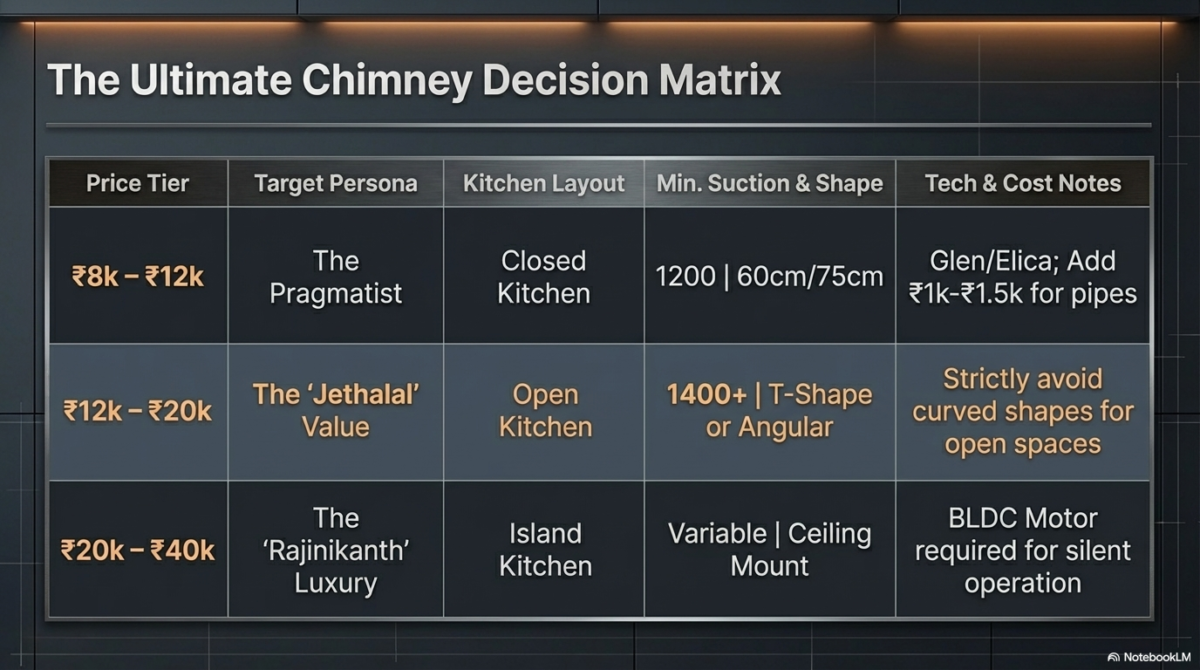
“Regardless of the model you settle on, remember that installation and ducting pipes are additional costs—budget for an extra ₹1,000 to ₹1,500 at the finish line.”
2. Why Your Kitchen Layout Dictates Your Suction Power
Suction power is measured in cubic meters per hour (m³/h), but the number you need is determined by the “air changes per hour” your specific layout requires. This is where many buyers under-spec their equipment.
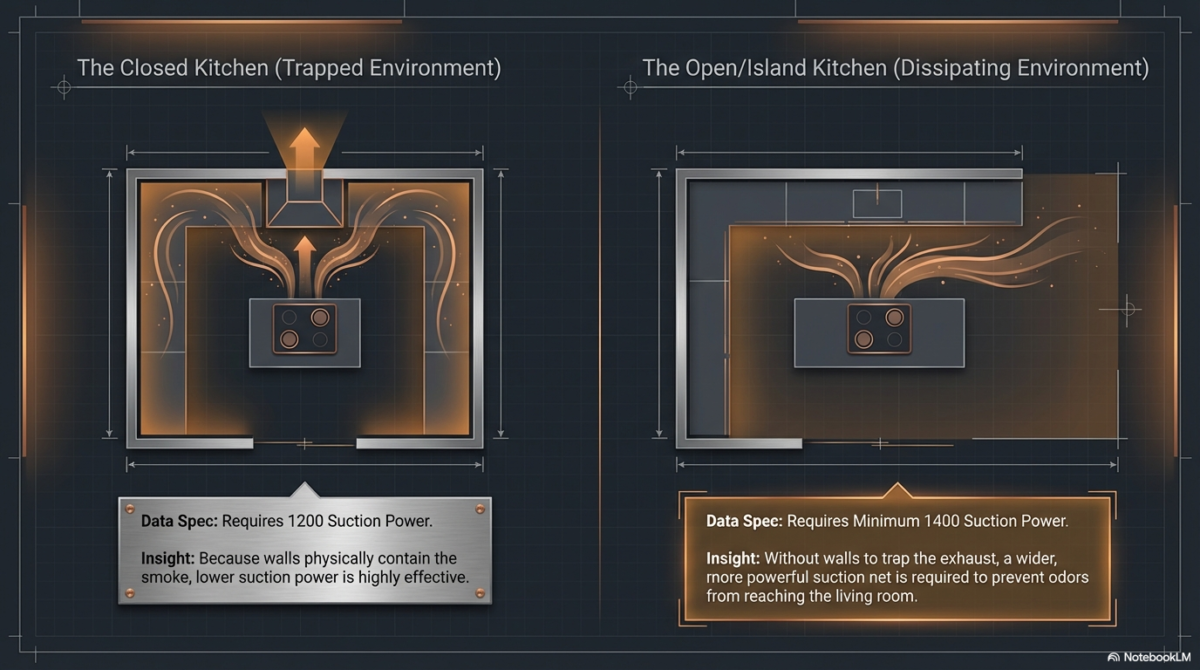
- Closed Kitchens: If your cooking area is enclosed by four walls and a door, a suction power of 1200 is the industry standard. It provides enough static pressure to clear the air without creating excessive noise in a confined space.
- Open Kitchens: For modern, fluid layouts where the kitchen blends into the dining or living room, you must step up. A minimum suction power of 1400 is non-negotiable.
The logic is purely technical: in an open layout, there are no physical barriers to stop smoke from migrating toward your upholstery and electronics. You need that extra “pull” to capture fumes the moment they leave the burner.
3. Avoiding the “Brand Trap” in the Economical Segment
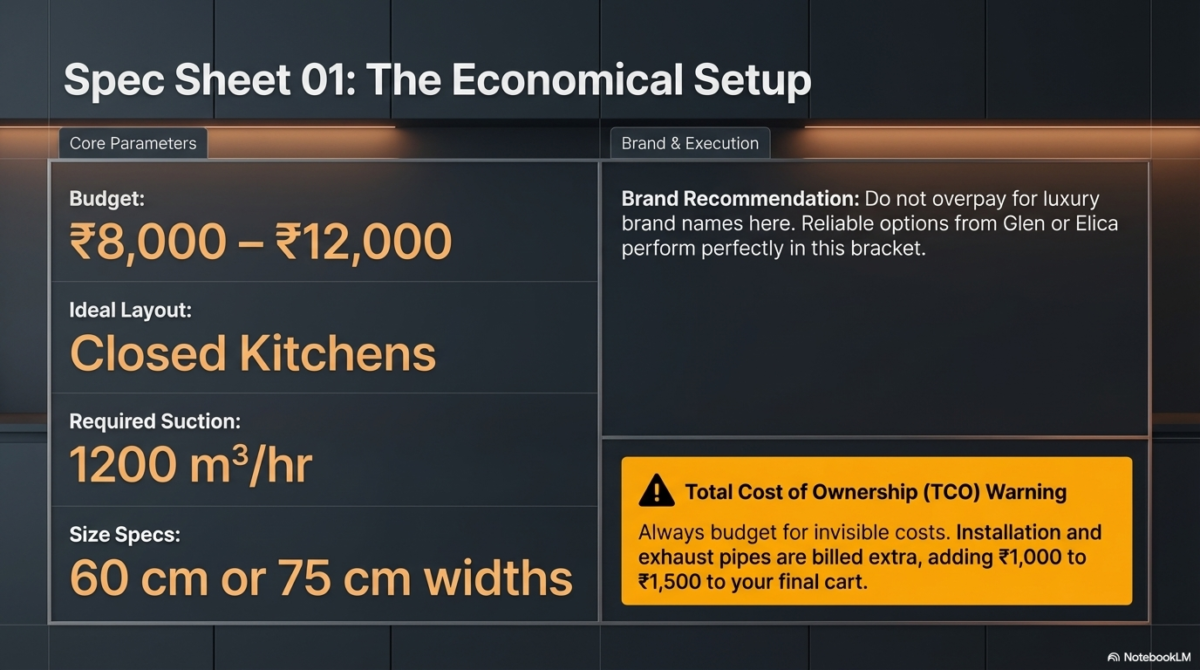
Economical (₹8K–₹12K) – Best for Closed Kitchens: ▸ 60cm / 75cm | Closed Kitchen | 1200 Suction kaafi
Glen Senza 60cm | 1200m³/hr | Filterless | AutoClean
https://www.wishlink.com/share/ncz3b2
Elica FL 600 SLIM | 60cm | 1200m³/hr | Filterless | Motion Sensor
https://www.wishlink.com/share/np3tx3
If you are operating within the ₹8,000 – ₹12,000 price bracket, you are in the “Economical” tier. My advice here is simple: do not pay a premium for a luxury logo on a budget machine. High-end prestige brands often outsource their entry-level models, leading to higher prices for basic performance.
In this segment, focus on “Value-First” brands like Glen or Elica. These manufacturers have robust service networks and offer reliable mechanical simplicity. For this budget, stick to a 60cm or 75cm width. These models provide the best return on investment by prioritizing a reliable motor and decent filtration over unnecessary digital gimmicks.
4. The “Jethalal” Tier: Why Shape Beats Style
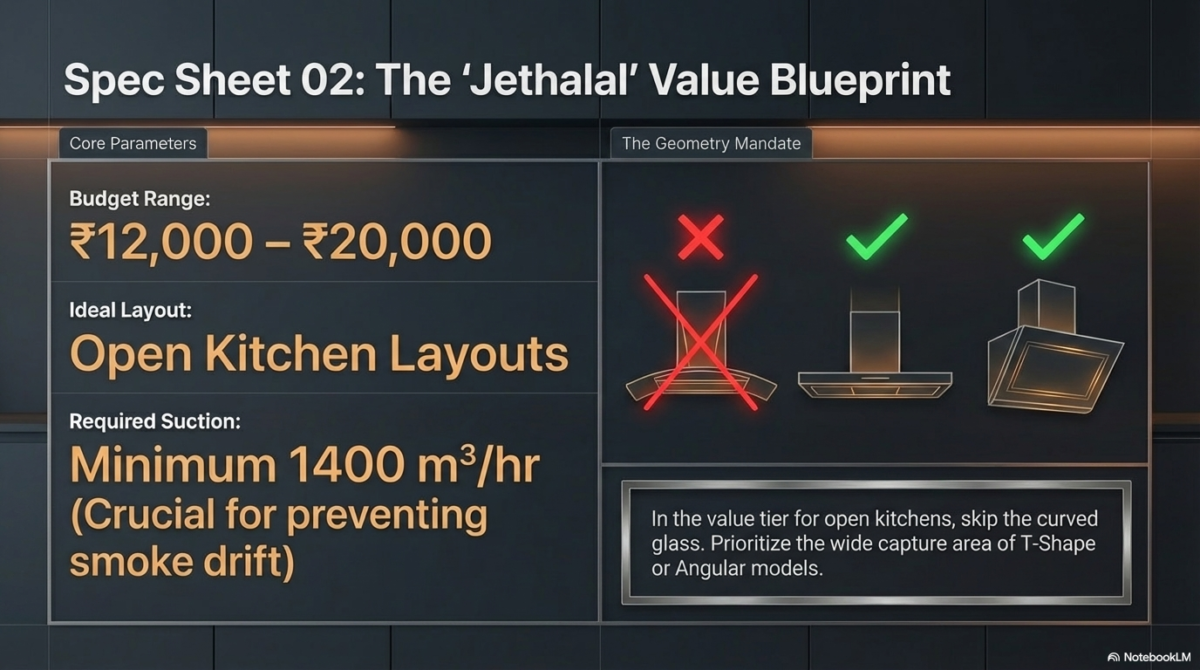
Value for Money (₹12K–₹20K) – Best for Open Kitchens: ▸ Open Kitchen | Min 1400 Suction | T-Shape / Angular lo
Glen Selena T-Shape | 60cm | 1200m³/hr | Filterless | AutoClean
https://www.wishlink.com/share/nv8xrx
Elica WDFL 606 | 60cm | 1350m³/hr | Filterless | 15Yr Motor Warranty
https://www.wishlink.com/share/nszvqf
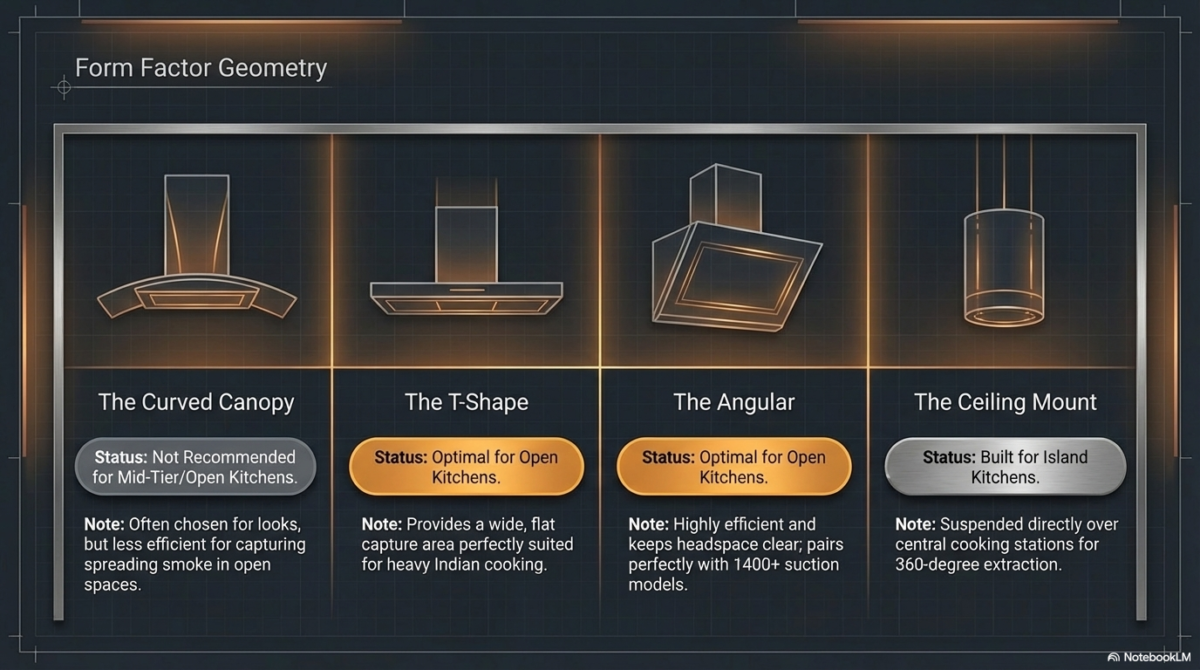
In the mid-range “Value for Money” segment—affectionately known in the industry as the “Jethalal” category (₹12,000 – ₹20,000)—the form factor of your chimney becomes a critical performance driver. While curved glass models are ubiquitous for their trendy look, they are often less efficient at capturing heavy steam from the edges of your cooktop.
For those looking toward 2026-standard performance today, I recommend choosing a T-Shape or an Angular design over curved glass.
- Angular chimneys provide a more direct, inclined path for smoke, effectively acting like a funnel.
- T-Shape models offer a larger, flat suction zone that covers the entire burner area more uniformly than the periphery-heavy suction of curved models. This design ensures that even during high-heat searing, no “stray” smoke escapes the filter’s reach.
5. The “Rajinikanth” Tier: The Engineering of Silence
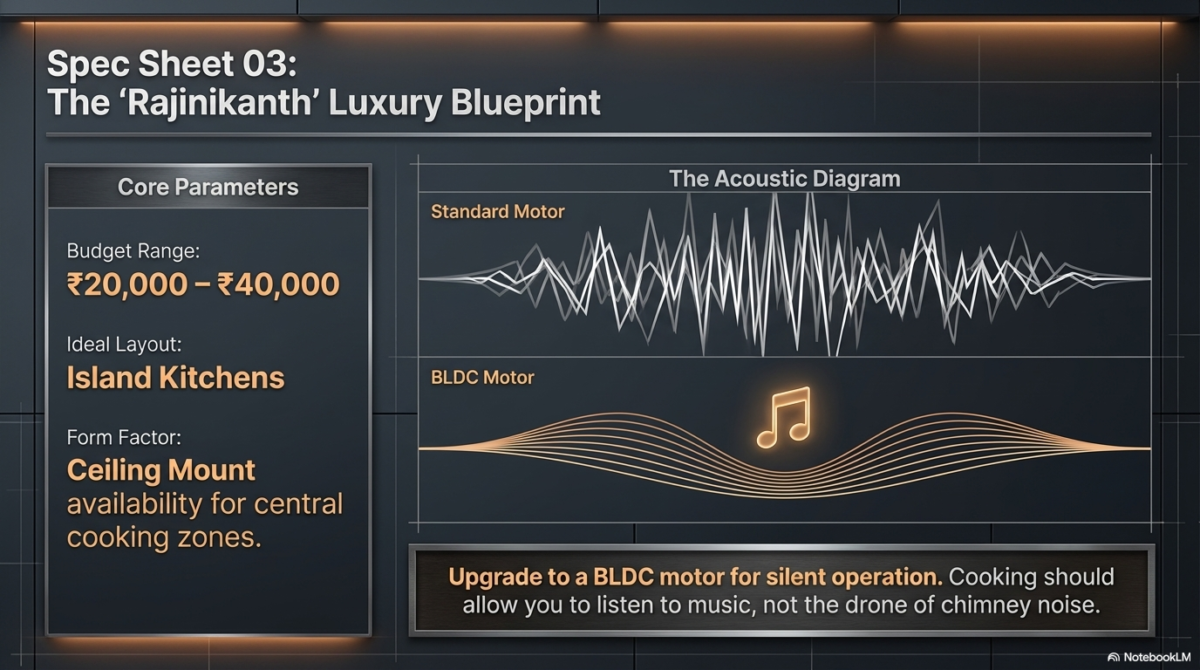
Luxury (₹20K–₹40K) – Low Noise & Premium: ▸ BLDC Motor | Low Noise | Island Kitchen = Ceiling Chimney
Elica WDFL 600 BLDC | 60cm | 1500m³/hr | 15Yr Motor Warranty
https://www.wishlink.com/share/nvbp8b
Faber Hood Agile BLDC | 60cm | 1500m³/hr | AutoClean | Filterless
https://www.wishlink.com/share/nb9wv8
When your budget scales into the Luxury or “Rajinikanth” segment (₹20,000 – ₹40,000), you are no longer just buying an exhaust fan; you are buying an engineered environment. The centerpiece of this tier is the BLDC (Brushless DC) motor.
As a technology journalist, I cannot overstate the importance of “Brushless” tech. By eliminating the carbon brushes used in traditional motors, these units significantly reduce internal friction and heat. This results in three major benefits: near-silent operation, higher energy efficiency, and a much longer lifespan for the motor. This segment also opens up specialized installations, such as ceiling-mount chimneys, which are a technical requirement for island cooking setups where there is no back wall for mounting.
“You should opt for a BLDC motor because, while cooking, you want to be able to hear your music or hold a conversation—not the constant, intrusive drone of a traditional motor.”
A Breath of Fresh Air
The secret to a successful kitchen upgrade is matching the technology to your lifestyle. Whether you’re outfitting a compact starter kitchen or a high-end open-concept social hub, your choice should be driven by suction needs, layout, and motor efficiency rather than aesthetics alone.
Is your current setup actually protecting your home’s air quality, or is it time to let your kitchen breathe again?