Table of Contents

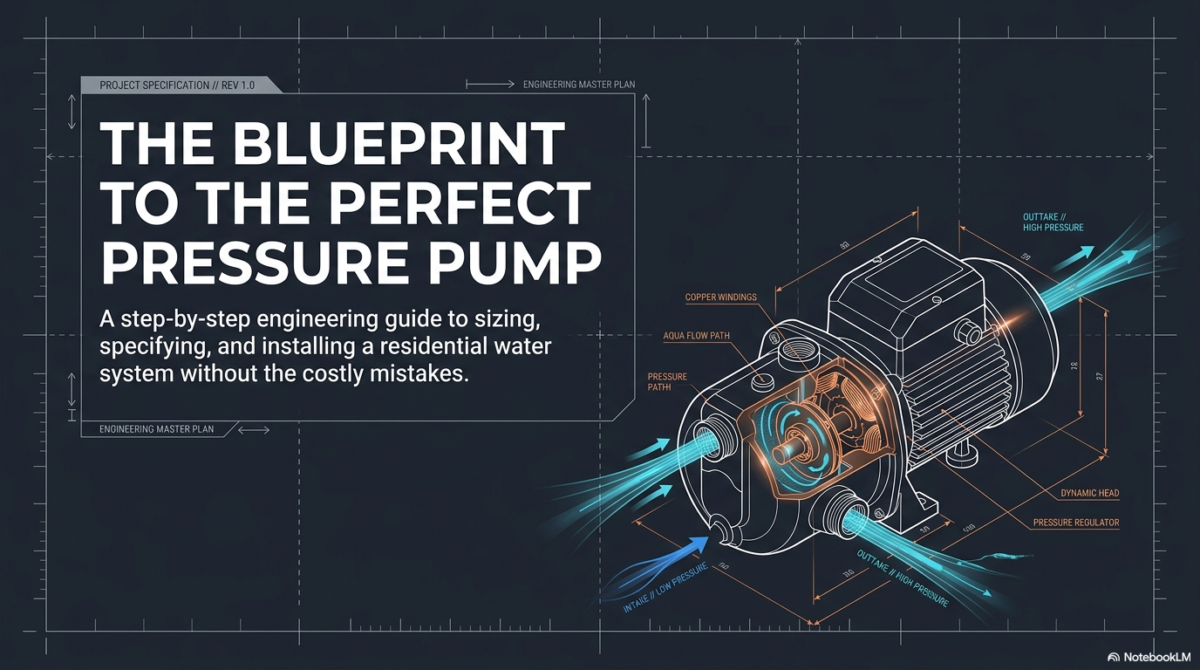
A blueprint-style cover showing a technical 3D cutout of a water pressure pump with internal copper windings and pressure paths labeled.

Why Your Shower Sucks: The Essential Guide to Choosing a Home Water Pressure Pump

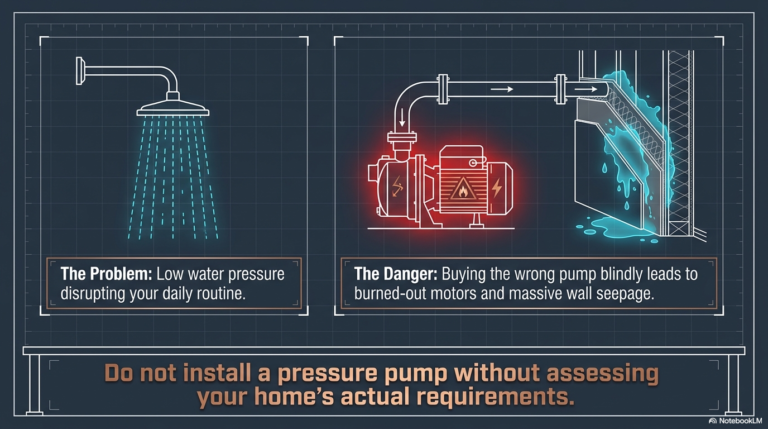
There is nothing more frustrating than stepping into a shower at the end of a long day only to be met by a weak, pathetic drizzle instead of a revitalizing spray. While the immediate impulse is to buy the most powerful pump available, as a technical consultant, I can tell you that "more power" isn't always better. Choosing a pump is a precise engineering exercise; select the wrong specs, and you risk either wasting money on a motor that underperforms or, worse, literally blowing the pipes out of your walls.

Best Buying Links (2026 Top Picks for India)

Choose based on your specific requirements and budget:

Category 1: Economical (Reliable & Budget Friendly)

Best for small apartments or single-floor independent houses.

* Kirloskar Chotu / Jalraaj (0.5 HP): The most trusted “workhorse” of Indian homes.

* https://amzn.to/488vLQx

Category 2: Value for Money (Performance + Durability)

Balanced choice for 2-3 floor homes with modern rain showers.

* Havells Hi-Flow MX Series (1 HP): Excellent energy efficiency and silent operation.

* https://amzn.to/42cBMIf

https://www.wishlink.com/share/n4jce8

Category 3: Luxury / High-End (Smart & Silent)

Best for premium villas, luxury bathrooms, and high-pressure requirements.

* Grundfos SCALA2: The gold standard. It’s a variable speed smart pump that maintains constant pressure even if 5 taps are open at once. Super silent.

* https://amzn.to/3OM0Rqr

The "Check Before You Buy" Rule

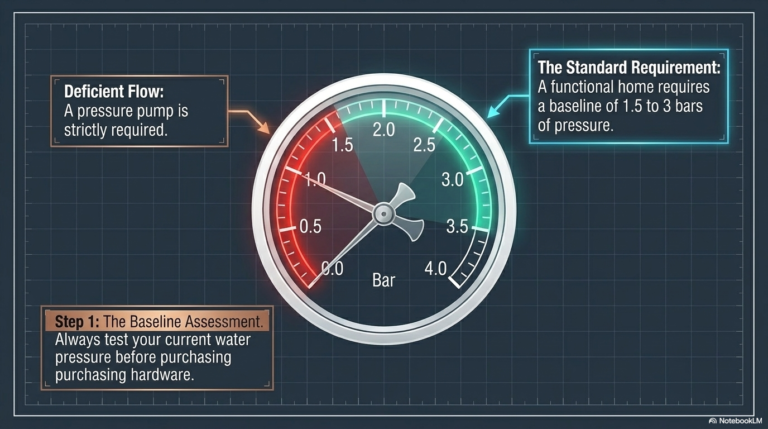
Before you browse catalogs or visit a showroom, you must establish a baseline. Following the 2026 Buying Guide logic popularized by Houme India, the first step is always a professional pressure test. To do this properly, have your plumber install a temporary pressure gauge at your main inlet or a specific bathroom tap.A standard modern home requires a steady pressure of 1.5 to 3 bar to operate fixtures like rain showers and diverters effectively. If your gauge reads below 1.5 bar, a pump is mandatory. However, installing one without this data is a tactical blunder. If your pressure is already at 2.5 bar and you add a high-capacity pump, you are asking for catastrophic plumbing failure.
Size Matters: Matching HP to Your Home’s "Head"

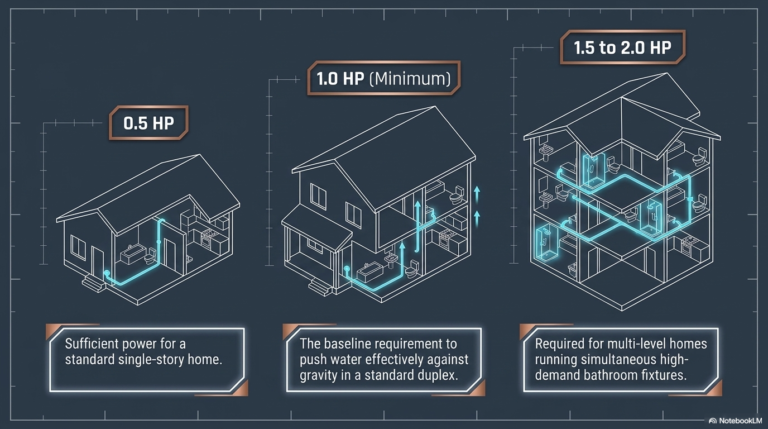
In pump terminology, size is measured in Horsepower (HP), which determines the “Head”—the vertical lift capacity required to push water against gravity to your highest floor. Matching the HP to your home’s scale is the difference between a functional system and a broken one:

  • Single-story homes: 0.5 HP is the industry standard.
  • Two-story bungalows: A minimum of 1 HP is required to maintain pressure at the upper level.
  • Three-story homes or residences with multiple bathrooms: 1.5 to 2 HP is necessary to handle the simultaneous demand.
The Expert’s Warning:
  • Over-pumping: If you put a 2 HP pump in a single-story home, the excessive force can shatter the delicate ceramic cartridges inside high-end faucets or cause the flex-hoses under your sinks to burst.
  • Under-pumping: Conversely, if the HP is too low for the building’s height, the pump may run continuously without ever reaching its “cut-off” pressure. This constant operation leads to rapid overheating and premature motor failure.

The Hidden Cost of Saving 500 Rupees

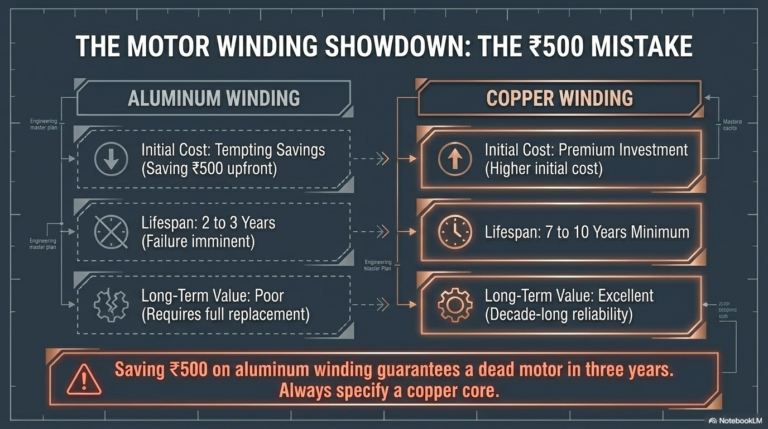
When evaluating motor quality, you will inevitably face a choice between copper and aluminum windings. An aluminum-winding motor is often 500 rupees cheaper, which attracts many homeowners, but this is a classic “false economy.” Copper is a superior conductor with much better heat dissipation properties, allowing it to handle the frequent on-off cycles of a pressure system without degrading.
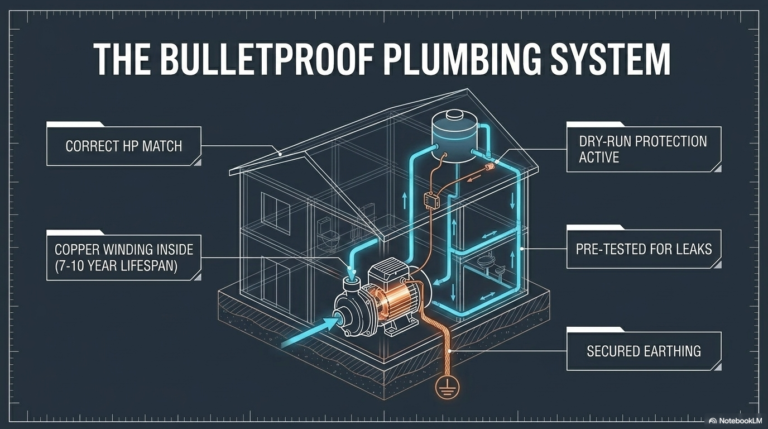
“Copper winding lasts 7 to 10 years, whereas aluminum only lasts 2 to 3 years.”
Saving a few hundred rupees today ensures you will be paying for a full replacement and a second installation fee in just twenty-four months.

The Non-Negotiable Safety Features

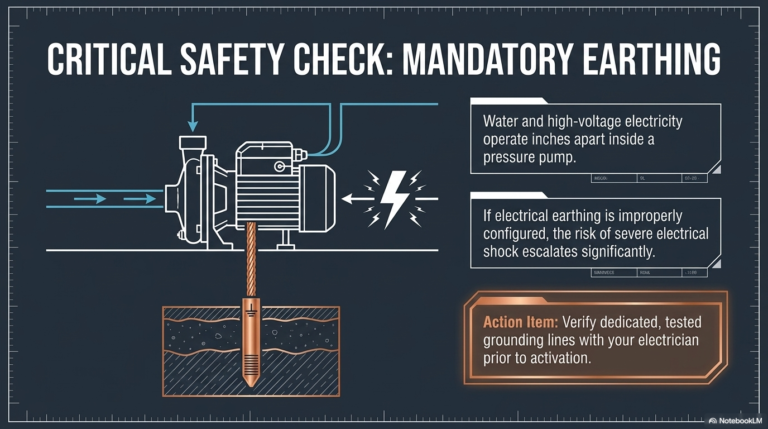
A pump is an electrical device sitting in a wet environment. As a consultant, I view the following two features as mandatory, not optional:
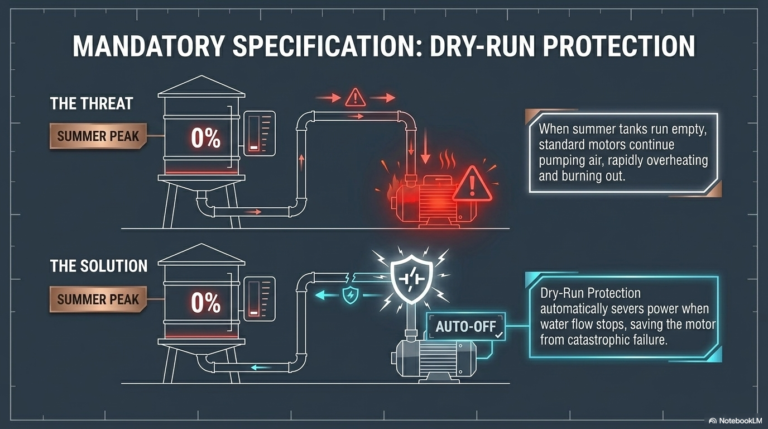
  1. Dry Run Protection: Most modern units utilize a flow sensor or float switch to detect if water is actually entering the pump. In peak summer months, overhead tanks often run dry. Without this protection, the motor will continue to spin at high speeds without the cooling effect of water, causing the internal components to melt or burn out.
  2. Earthing: Proper grounding is life-saving. In rooftop or pump-room installations where water leakage is common, poor earthing creates a massive risk of electric shocks. Ensure your electrician verifies the earthing circuit specifically for the pump outlet.

The "Leak Test" Warning

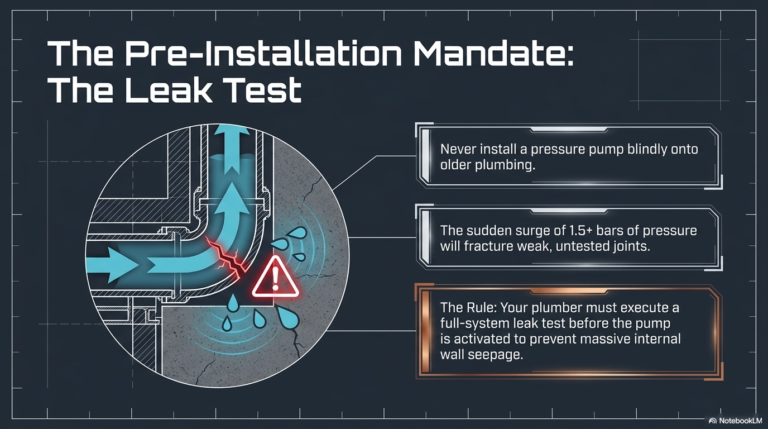
If you are currently constructing a new home, pay close attention: you must demand that your plumber performs a high-pressure pipe leak test before the pump is even unboxed.
Standard plumbing joints often hold up under simple gravity-fed pressure. However, when you introduce a pump, the pipes are pressurized to levels significantly higher than their usual state. A “Leak Test” involves pressurizing the lines to higher than the pump’s maximum output to find weak points. If you skip this, a joint failure behind a wall won’t just be a “leak”—it will result in structural seepage and ruined false ceilings, costing tens of thousands in drywall and plaster repairs.

Conclusion: A Smart Investment in Comfort

Upgrading your water pressure is a significant lifestyle improvement, but it requires technical diligence to get right. From measuring your bar levels with a gauge to ensuring your motor is wound with copper, every choice determines whether your investment is a decade-long success or a two-year headache.
As you plan your next home upgrade, ask yourself: Are you buying a pump for two years, or are you investing in a system that lasts ten?